COPC Assets · Western Cape
Finding and managing your community's assets.
Community-Oriented Primary Care serves a defined community by its assessed needs. This is the other half of that same picture: finding, mapping and mobilising the assets a community already holds, the gifts of its people, the groups that hold it together, and the places and stories it shares, so that COPC builds on strength as well as need. It is one part of COPC, not another thing to add.
The wider literature calls this way of working Asset-Based Community Development. Here it is simply the assets side of COPC, explained in plain terms and put to work.

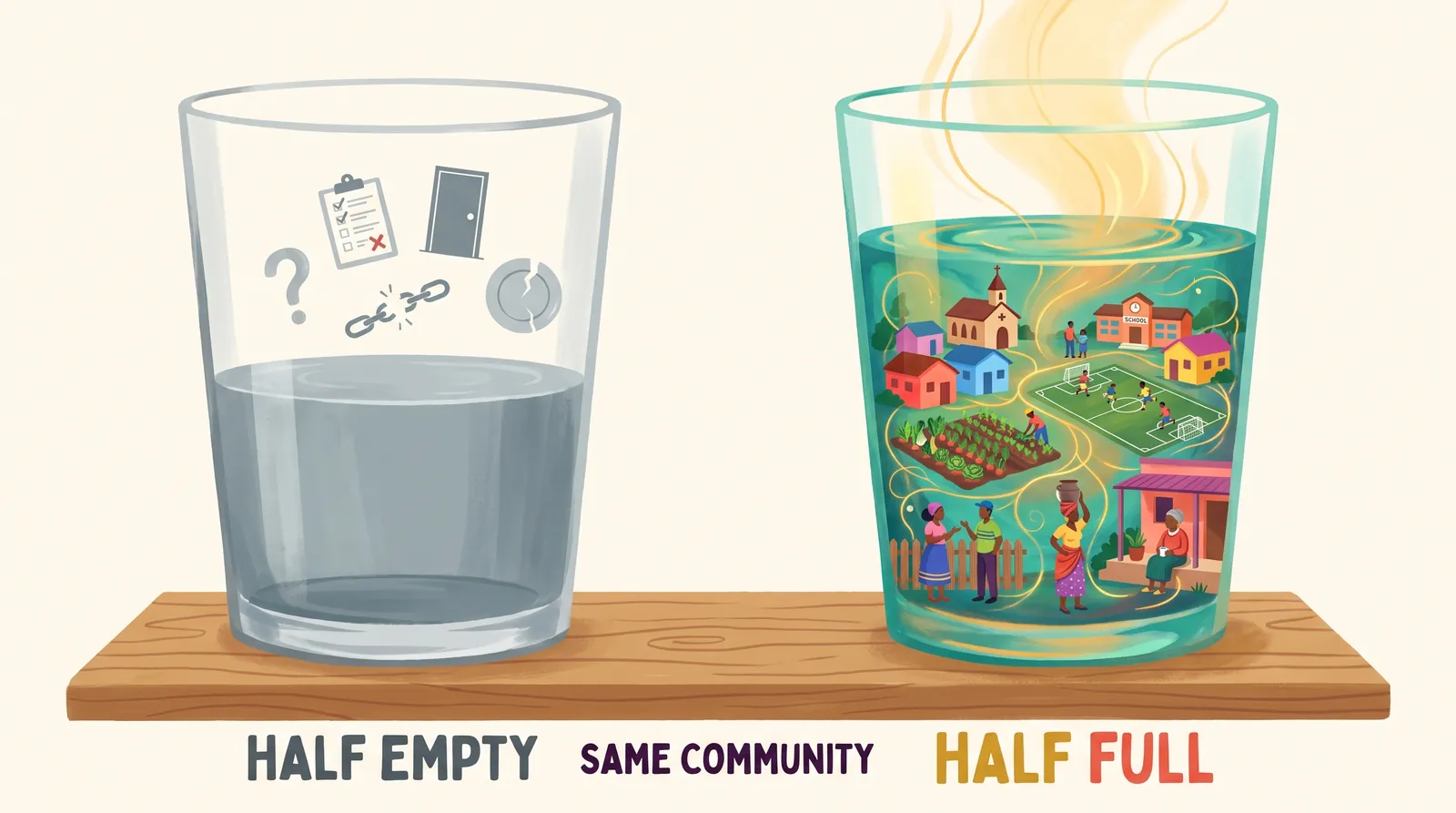
The glass half-full
The same water. The same community. Only the way of looking changes.
A community that is only ever surveyed for its problems learns to describe itself by its problems. The assets side of COPC proposes the opposite starting point: begin with what is present rather than what is absent.
Starting with strengths is not a claim that nothing is wrong. The needs are real and they are recorded in full. It is a claim about how problems get addressed, and by whom. Not only what service must respond, but who here already does something about this, and what would help them do more.
Four ways in
Whatever brought you here, there is a door.
The same body of work, told four ways: for the teams who run it, for the communities who own it, in short film, and in the evidence behind it.
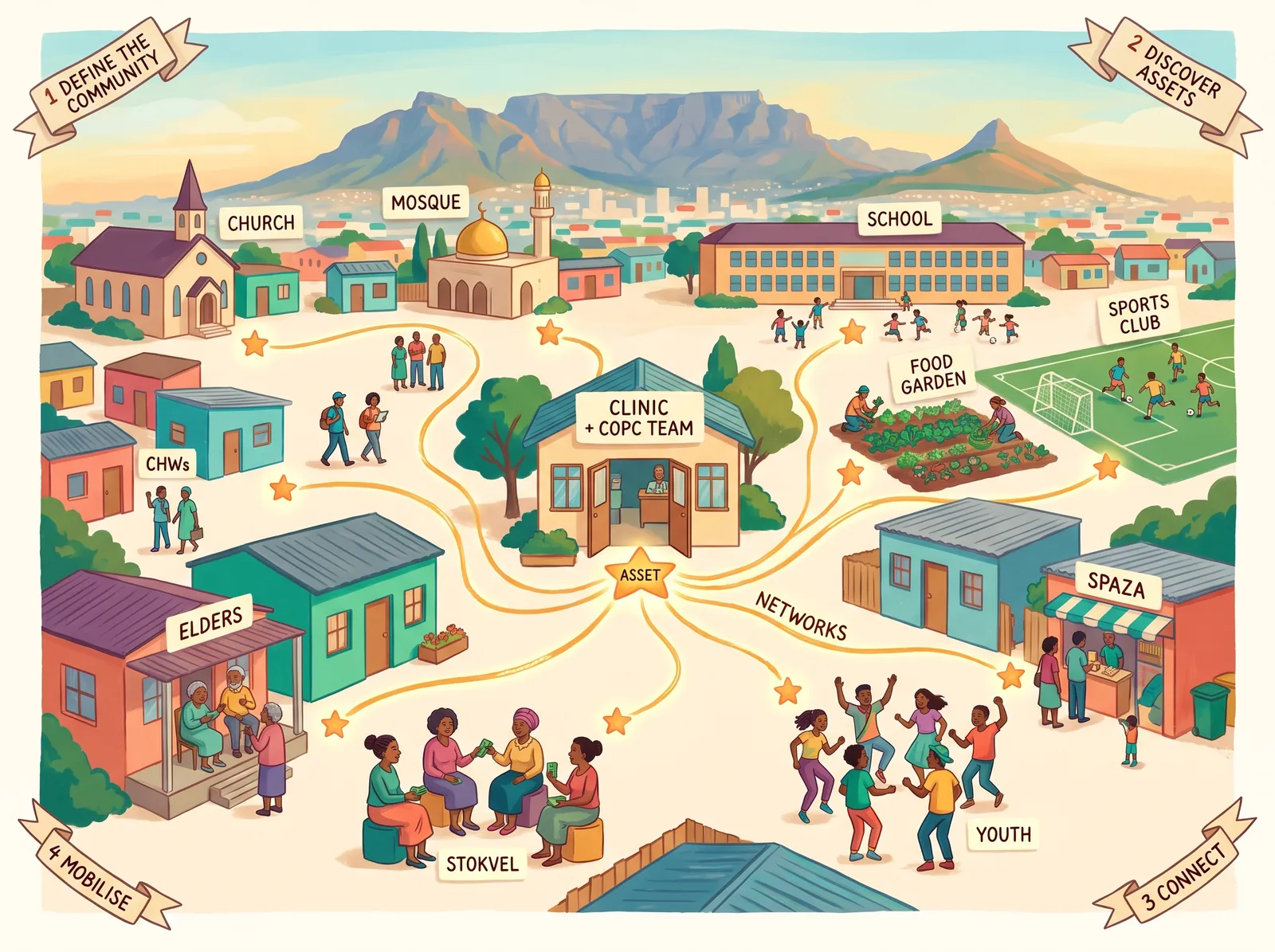
The how-to guide
For health workers and facilitators. Thirteen sections: from the ideas to asset mapping, step by step, and what to do after the map.
Read the guide →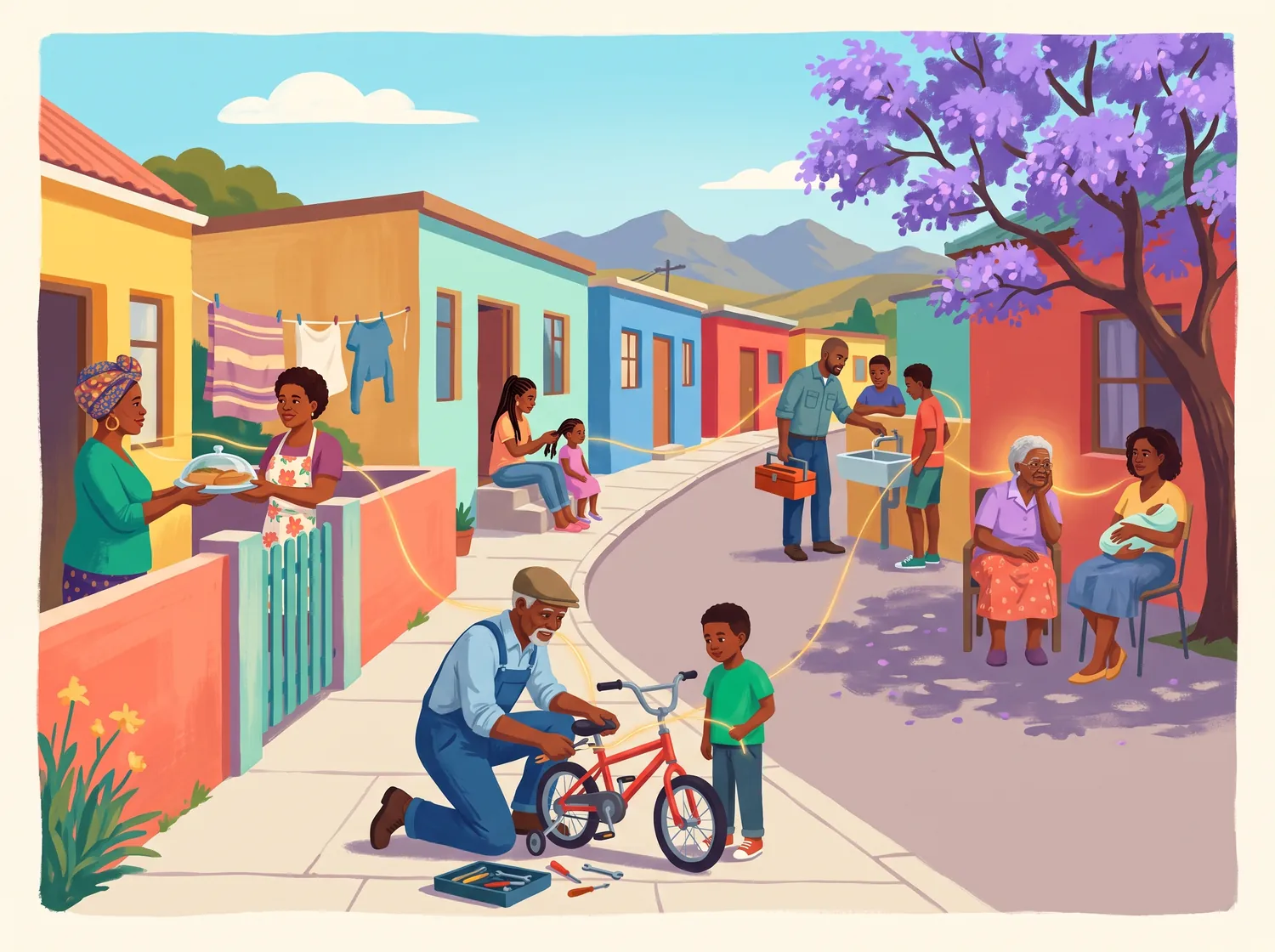
The community booklet
Plain language, carried by its illustrations. For the church group, the school, the ward committee, or a few neighbours who decided to start.
Open the booklet →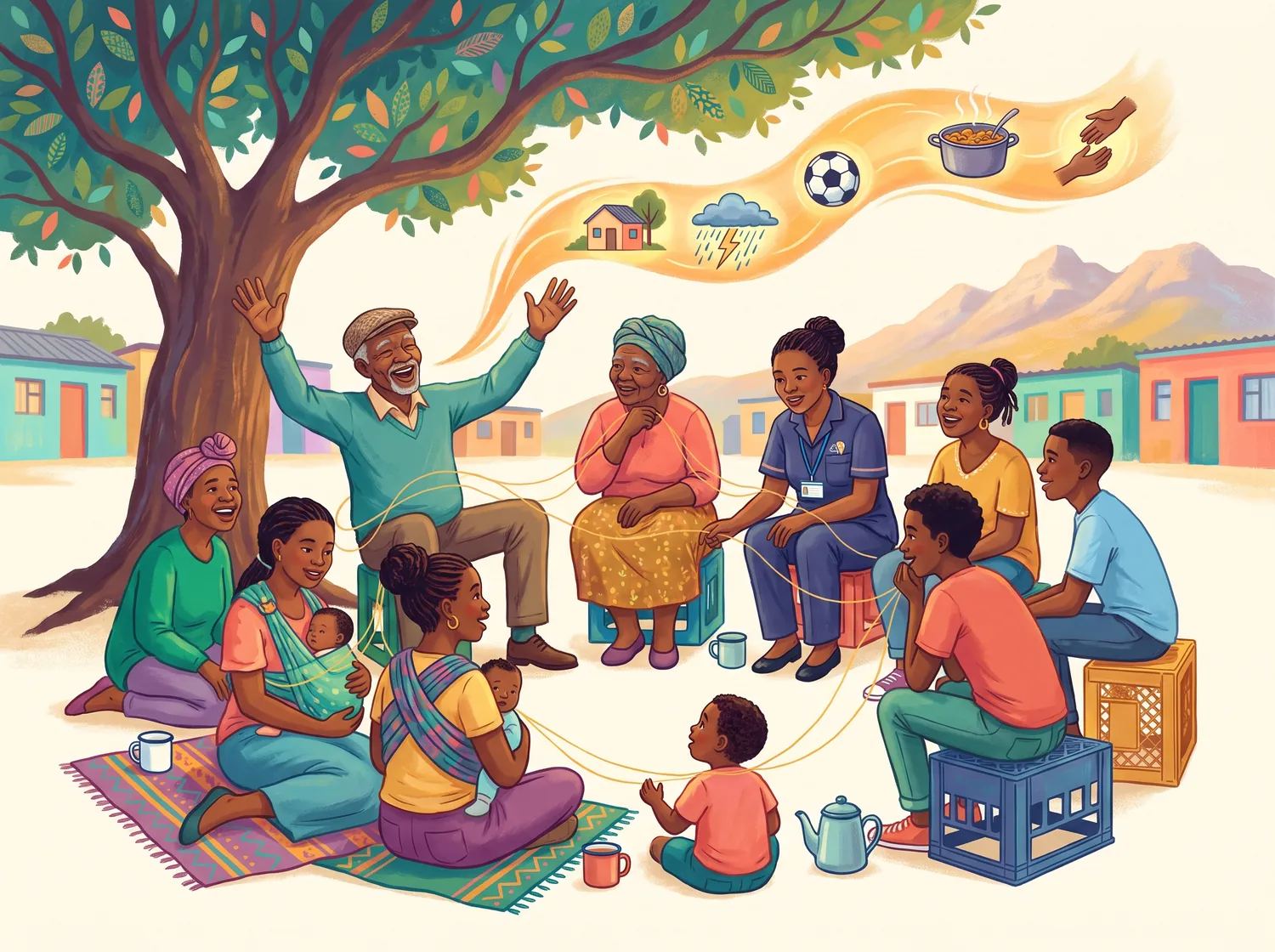
The films
Two short films: the glass half-full, and the clinic as a super-connector. Each with its transcript on the page.
Watch the films →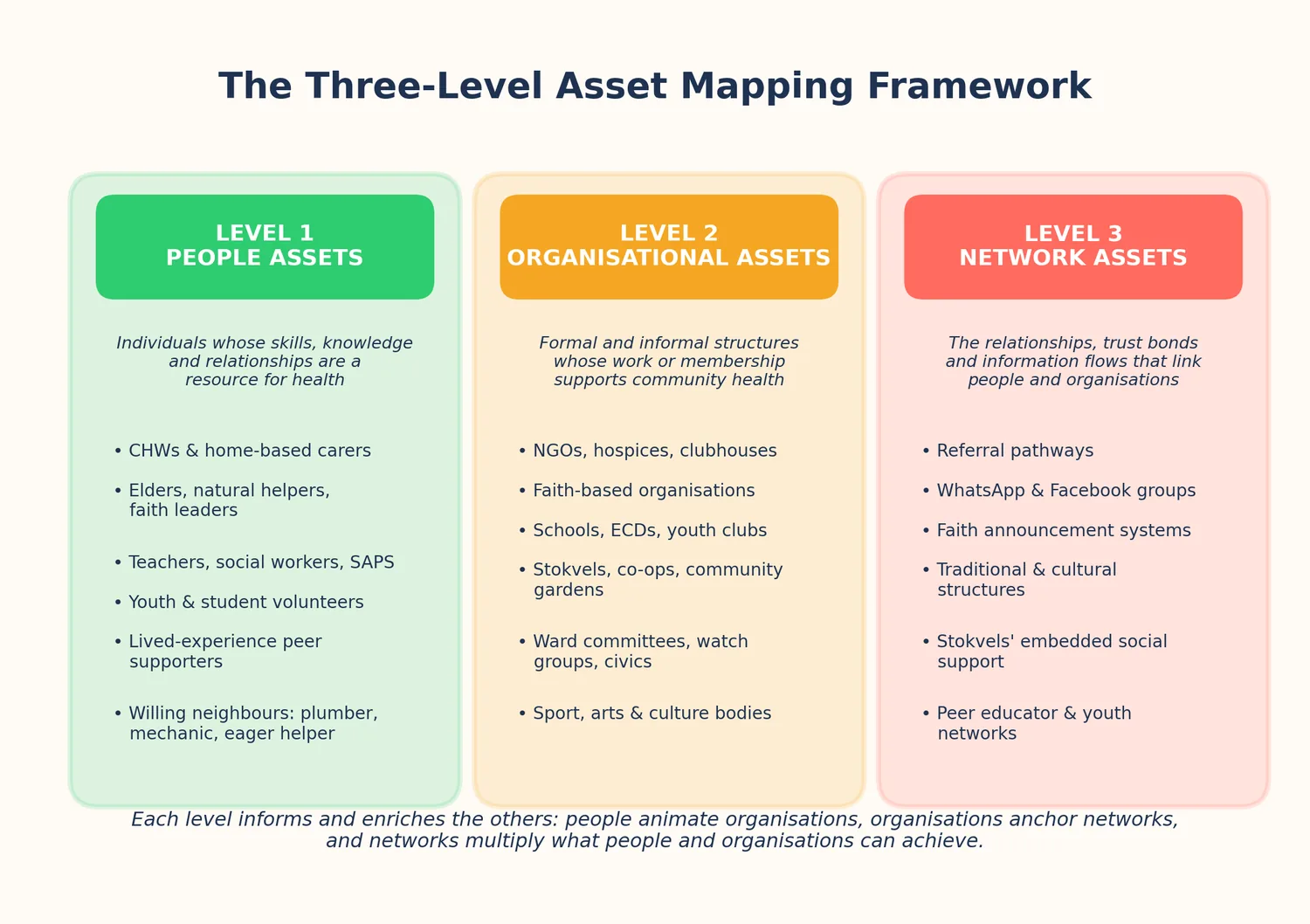
Foundations & evidence
Where the asset approach (ABCD) comes from, how it sits within COPC, the case studies, and an honest appraisal of what the evidence does and does not yet show.
Read the foundations →Whose work this is
Not a programme to be rolled out. A way of seeing, for whoever is already here.
Faith groups, schools, ward committees, sports clubs, burial societies, savings groups. In most places somebody is already doing a version of this. The task is to find them, not to replace them.
The asset register, the stories and the timeline live where the community keeps them. What enters departmental systems is a copy, shared by agreement, and removable on request.
Map assets and needs. Mobilise strengths and advocate for resources. Starting with strengths lets nobody off the hook, and never becomes an argument for the state to do less.
This work builds a community's capacity to act, which pays off against the problem in front of us and against the one nobody has named yet. So that when something does go wrong, a fire, a flood, an outbreak, a week without water, we are not starting from strangers.
Where to start
Read the guide, or sit under the tree.
You do not need permission, a budget or a committee. You need a place to sit, a few chairs, something warm to drink, and somebody willing to write down what is said.